Skip navigation



Skip hire should be a simple, hassle free process when you make the right preparations beforehand.
It’s the small details and thinking ahead that can make the world of difference. Choosing the right size, knowing what waste can go in, and planning where it will sit can save you from extra charges, delayed collections, or contaminated waste that can’t be recycled as it should.
Our latest post explores five quick steps you can take before hiring a skip to help you get it right the first time.
Choose the right skip size for the job.
Choosing a suitable skip size is the first hurdle. It comes down to the job you’re tackling and how much waste it’s likely to produce. It’s easy to underestimate, especially with kitchen refits or garden clearances where bulky materials can add up quickly.
As a rule of thumb, if you’re choosing between two sizes, it’s usually worth going for the larger one out of the two. A bit of extra space is far easier to manage than running out halfway through and needing a second skip.
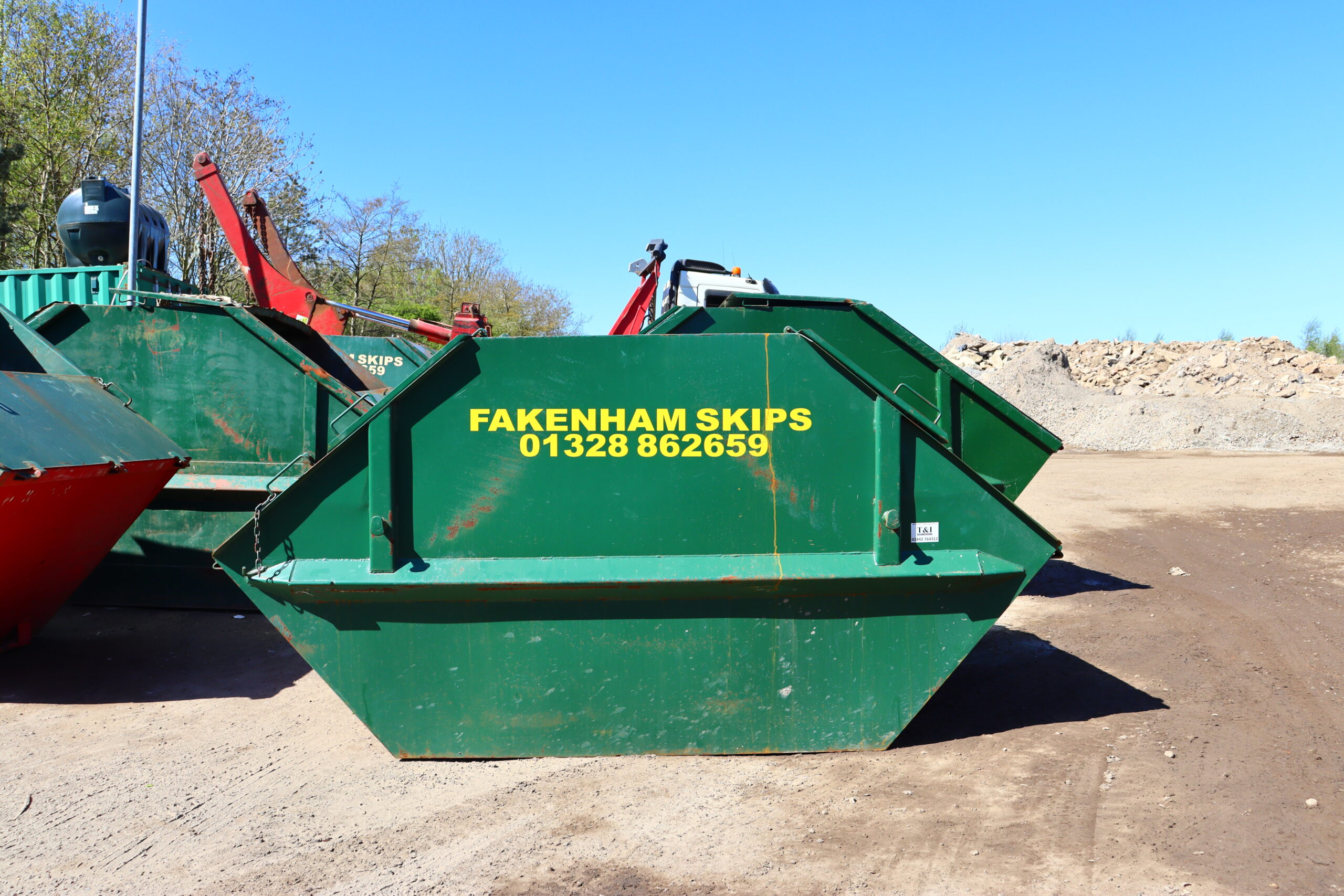
To help you make the right choice, our Midi, Large, and Extra Large skip size pages include guidance on the type of jobs each size suits. You’ll also find a rough guide in the number of bin bags as well as cubic yards, which helps put things into perspective.
And if you’re still unsure, just give us a shout. The Fakenham team is always happy to talk it through and point you in the right direction.
Check what can and can’t go in your skip.
Not everything can go into a standard skip. Some materials can contaminate general waste and render it non recyclable. This includes plasterboard (gypsum-based material), wet paint, fridges, and asbestos.
It’s something we see quite often, and it can lead to extra charges for specialist disposal or delays with collection if a skip can’t be safely taken away.
As a guide, keep plasterboard, asbestos, and appliances like fridges separate from your general waste. If you’re ever unsure about an item, it’s always best to check before loading it in.
You’ll find a list of non-permitted items on each of our skip pages. If something isn’t listed, just give the team a call and we’ll be happy to advise. It’s always better to check first than deal with it later.
Plan where your skip will go.
Make sure to think about access and placement ahead of delivery day. A skip lorry needs enough room to safely drop off and collect the skip, with clearance to move in and out without obstruction. As a guide, we recommend allowing around 9.5ft of clear access to the spot where you’d like the skip to be placed.
It’s also worth considering how the space will work once the skip is in place. Make sure it’s not going to block access to your driveway, garage or site, and that it’s positioned somewhere easy to load from.
If you’re placing it on a driveway, check that the ground is solid and can take the weight. Skips can be heavy once filled, and softer surfaces or block paving can be marked if you’re not careful.
If you have any concerns about access, it’s always best to call ahead. A quick check beforehand helps avoid last minute issues and keeps everything running smoothly on the day.
Load your skip safely and evenly.
You might not notice initially, but skips usually come with a fill line. This isn’t just a guide; it’s the level your waste needs to sit below so the skip can be transported safely.
Once that skip is loaded above the line, it becomes a risk on the road. Loose or uneven loads can shift during transport, which means the driver may not be able to take the skip away until it’s been levelled off.
To make the most of your space, break down larger items and spread the weight evenly as you go. Flat items at the bottom, lighter materials on top, and no big gaps left in between.
If a skip is overfilled, collection can be delayed while it’s sorted. This can slow everything down, especially if you’re working on a tight schedule. A few extra minutes spent loading it properly can save a lot of hassle later on.
Book your skip in good time.
Our busiest periods tend to be in the early Spring, and September to October, when spring clear outs, garden clearances and site work all pick up.
We’d advise booking two weeks or so ahead for a better choice on sizes and delivery dates. It also means you’re not trying to work around limited availability at the last minute.
It’s also worth thinking about how long you’ll need the skip for. Planning your hire around the job helps to plan in advance for permits, and avoid rushing at the end.
That said, if you’re working to a tighter timeline, just give us a call. If we can fit you in, we will.
Before you book…
Before you order online, take a moment to think through the key bits. The size you need, what’s going in, and where it’s going to sit. Getting those right early on makes everything easier once the skip arrives and helps you avoid any last minute hiccups.
Here to help when you’re ready
With a bit of planning, skip hire really can be straightforward. Get the basics right and everything else tends to fall into place.
If you’re getting started on a project and need a hand choosing the right skip, the Fakenham team is always here to help. Give us a call on 01328 862659 or send an enquiry and we’ll point you in the right direction.